Not medical advice. Product claims come from manufacturers and are attributed to them; research is cited separately. Mens Fitness earns a commission if you buy through our links, at no extra cost to you. How we review.
Short answer
No. Human growth hormone (HGH) is a protein hormone made by the pituitary gland, while anabolic steroids are synthetic substances similar to testosterone. Both are misused for muscle and performance, which is why people mix them up, but they are different substances with different legal rules. Prescription HGH is given by injection, and oral “HGH” supplements do not contain HGH.
Key facts
| Question | Answer |
|---|---|
| What is HGH? | A small protein hormone made by the pituitary gland (Harvard Health) |
| Is it a steroid? | No. NIDA lists HGH as a non-steroid substance, separate from anabolic steroids (NIDA) |
| What are anabolic steroids? | Synthetic substances similar to testosterone, taken as tablets, injections, gels or creams (NIDA) |
| How is prescription HGH given? | By injection under the skin (MedlinePlus) |
| Is HGH legal in the US? | Prescription only, for approved medical uses. Distributing it for other uses is a federal offence (FDA) |
| Do HGH supplements contain HGH? | No. They are sold as “releasers” or “boosters” made of amino acids and other ingredients |
What does HGH do in the body?
HGH is released by the pituitary gland, a small gland at the base of the brain. In children and teenagers it drives growth of bone and cartilage. At all ages it boosts protein synthesis and raises levels of insulin-like growth factor 1 (IGF-1), which carries out many of its effects (Harvard Health).
Cleveland Clinic explains that HGH also affects how the body turns food into energy. The pituitary releases it in pulses, with most of it released at night during sleep (Cleveland Clinic).
What is the difference between HGH and steroids?
The confusion is understandable. Both are called “anabolic” in sports and bodybuilding, and both are banned in competitive sport. But they are different substances:
- Chemistry. Anabolic steroids are synthetic substances similar to testosterone, the male sex hormone (NIDA). HGH is a protein made by the pituitary gland (Harvard Health).
- How they are taken. NIDA notes that some anabolic steroids come as oral tablets, others as injections, and others as gels or creams. Prescription HGH is injected (MedlinePlus).
- How they are classified. NIDA’s steroid guide lists HGH, insulin and IGF-1 as non-steroid substances. The body makes them, doctors prescribe them for real medical uses, and some people misuse them for performance (NIDA).
Is HGH an oral steroid?
No. “Oral steroid” usually means an anabolic steroid in tablet form, and NIDA names several of those. HGH is not a steroid, and prescription HGH is not a tablet. Any pill or spray sold as “HGH” without a prescription is a supplement that does not contain the hormone.
Prescription HGH vs HGH “releaser” supplements
| Prescription HGH (somatropin) | HGH releaser supplements | |
|---|---|---|
| Contains HGH? | Yes, a man-made version of the hormone | No |
| How it is taken | Injection | Tablets, capsules or oral sprays |
| Who decides | A doctor, after diagnosis | The buyer |
| Regulated as | A prescription drug | A dietary supplement |
| Approved uses | Growth hormone deficiency and a short list of other conditions | None. Supplements are not FDA approved to treat or prevent disease (FDA) |
Prescription HGH is sold as somatropin. MedlinePlus lists its uses as growth failure caused by hormone deficiency, weight and endurance loss in people with HIV, and short bowel syndrome in adults who need special nutrition (MedlinePlus).
Releaser supplements are a different product category. They contain amino acids, herbal extracts and other ingredients that the maker says support the body’s own growth hormone production.
Is HGH legal?
In the US, HGH is a prescription drug. FDA lists the approved uses. In children, these include growth failure or short stature linked to growth hormone deficiency, chronic kidney disease, Turner syndrome, Prader-Willi syndrome and a few other conditions. In adults, they are growth hormone deficiency and short bowel syndrome in patients on specialised nutrition. FDA states that HGH is not approved for anti-aging, bodybuilding, weight loss or athletic performance (FDA Import Alert 66-71).
Federal law goes further than for most prescription drugs. Section 303(e) of the Federal Food, Drug, and Cosmetic Act makes it an offence to knowingly distribute HGH, or possess it with intent to distribute, for any use in humans other than treating a disease or recognised medical condition on a doctor’s order (FDA). A 2007 review in the Annals of Internal Medicine notes that distributing HGH as an anti-aging agent is illegal in the United States (Liu et al., 2007).
FDA also warns that, because approved HGH is expensive, counterfeit and unapproved HGH products have entered the US supply chain (FDA). HGH bought without a prescription may not be what the label says.
Does HGH help athletes?
The evidence is weak. A systematic review of trials in healthy, fit young adults found that HGH increased lean body mass but did not seem to improve strength or exercise capacity. People taking it had more soft-tissue swelling and fatigue. The authors concluded that claims that HGH improves physical performance are not supported by the scientific literature (Liu et al., 2008).
Side effects of HGH therapy
Even when prescribed, HGH has side effects. MedlinePlus lists common ones such as headache, muscle or joint pain, and pain, redness or skin thickening at the injection site. More serious effects include vision changes, allergic reactions, severe stomach pain, swelling of the arms or legs, knee or hip pain and breast enlargement. MedlinePlus also warns that somatropin may raise the risk of some cancers, including brain and skin cancer (MedlinePlus).
In healthy older adults, a review of randomised trials found only small changes in body composition. People given HGH were more likely to get soft-tissue swelling, joint pain, carpal tunnel syndrome and breast enlargement. They were also somewhat more likely to develop diabetes or raised fasting blood sugar. The authors concluded HGH cannot be recommended as an anti-aging therapy (Liu et al., 2007).
Why oral supplements do not contain HGH
HGH is a protein. Protein and peptide medicines are hard to give by mouth because stomach acid and digestive enzymes break them down, and the gut lining lets little through (Oral delivery review, 2025). That is why prescription HGH is injected (MedlinePlus).
Over-the-counter “HGH” products therefore work on a different idea. They supply amino acids and other ingredients that the maker says encourage the body to release more of its own growth hormone. That idea has limits:
- In one small study, 5 g and 9 g of oral arginine raised growth hormone in healthy young men. A 13 g dose caused stomach upset in most subjects without a bigger effect (Collier et al., 2005). Those are gram doses, far more than most supplements list.
- In a study of male bodybuilders, commercial amino acid supplements taken at the makers’ recommended amounts did not consistently change growth hormone levels (Lambert et al., 1993).
- A short-term rise in growth hormone is not the same as more muscle, less fat or slower aging. None of the studies above measured those outcomes for a branded supplement.
Where supplements fit
HGH releaser supplements are not a substitute for prescription HGH. They are not steroids, and they do not contain the hormone. If you are thinking about one, look for a published ingredient list, a clear manufacturer and honest wording about the evidence. We review two products from the same maker:
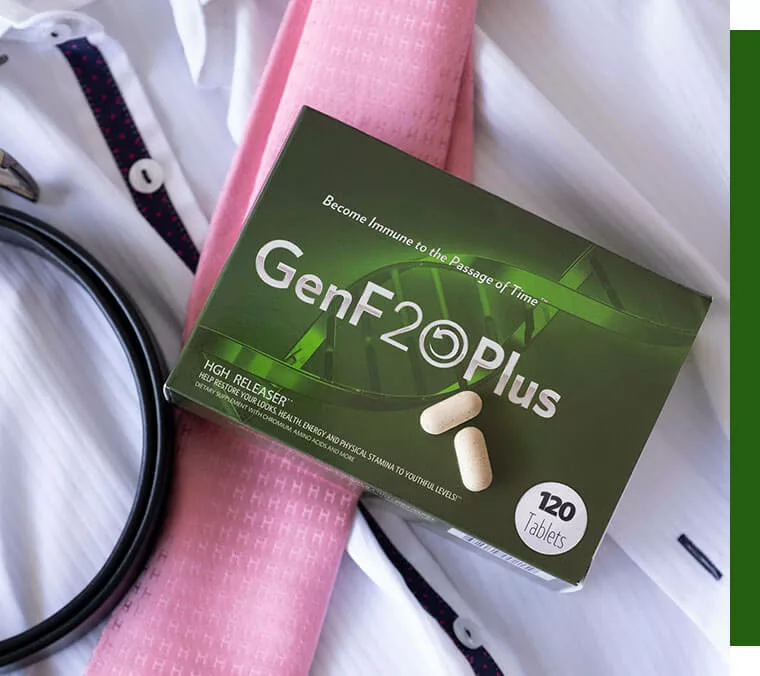
- GenF20 Plus review: ingredients, how it is claimed to work and what the evidence shows
- HyperGH 14x: the same maker’s product aimed at people who train
If you think you may have low growth hormone, speak to a doctor. A deficiency is diagnosed with blood tests, and treatment is prescribed and monitored. You can read how we assess products on our how we review page.
FAQ
Is HGH a steroid?
No. HGH is a protein hormone made by the pituitary gland. Anabolic steroids are synthetic substances similar to testosterone. NIDA lists HGH as a non-steroid substance.
Is HGH an oral steroid?
No. Some anabolic steroids come as tablets, but HGH is neither a steroid nor a tablet. Prescription HGH is injected.
Is HGH legal in the US?
Only with a prescription for an approved medical use. Federal law makes it an offence to distribute HGH for other uses, such as anti-aging or bodybuilding.
Do HGH supplements contain real HGH?
No. Over-the-counter releasers and boosters contain amino acids, herbal extracts and other ingredients, not the hormone itself.
Does HGH build muscle?
In trials with healthy young adults, HGH increased lean body mass but did not seem to improve strength or exercise capacity, and it caused more side effects.
What are the side effects of HGH?
Reported side effects of HGH therapy include swelling, joint and muscle pain, carpal tunnel syndrome, breast enlargement and higher blood sugar. MedlinePlus also warns of a possible higher risk of some cancers.
Can I take an HGH releaser instead of prescription HGH?
No. A releaser supplement is not a treatment for growth hormone deficiency. If you have symptoms, see a doctor for testing.
Sources
- Harvard Health: Growth hormone, athletic performance, and aging
- Cleveland Clinic: Human growth hormone (HGH)
- NIDA: Anabolic steroids DrugFacts
- MedlinePlus: Somatropin injection
- FDA Import Alert 66-71: Unapproved human growth hormone
- FDA: 10 facts about what FDA does and does not approve
- Liu et al., 2008. Systematic review: the effects of growth hormone on athletic performance. Annals of Internal Medicine
- Liu et al., 2007. Systematic review: the safety and efficacy of growth hormone in the healthy elderly. Annals of Internal Medicine
- Oral delivery of protein and peptide therapeutics, 2025. Progress in Molecular Biology and Translational Science
- Collier et al., 2005. Growth hormone responses to varying doses of oral arginine. Growth Hormone & IGF Research
- Lambert et al., 1993. Failure of commercial oral amino acid supplements to increase serum growth hormone concentrations in male body-builders. International Journal of Sport Nutrition